 /
/ 
Can't We All Just Be Friends?
Leftist Infighting Today and 100 Years Ago: Thoughts On "Amiable with Big Teeth"
This piece was originally posted on Substack on 6 June 2025.
First of all, can we appreciate the cover of this book?
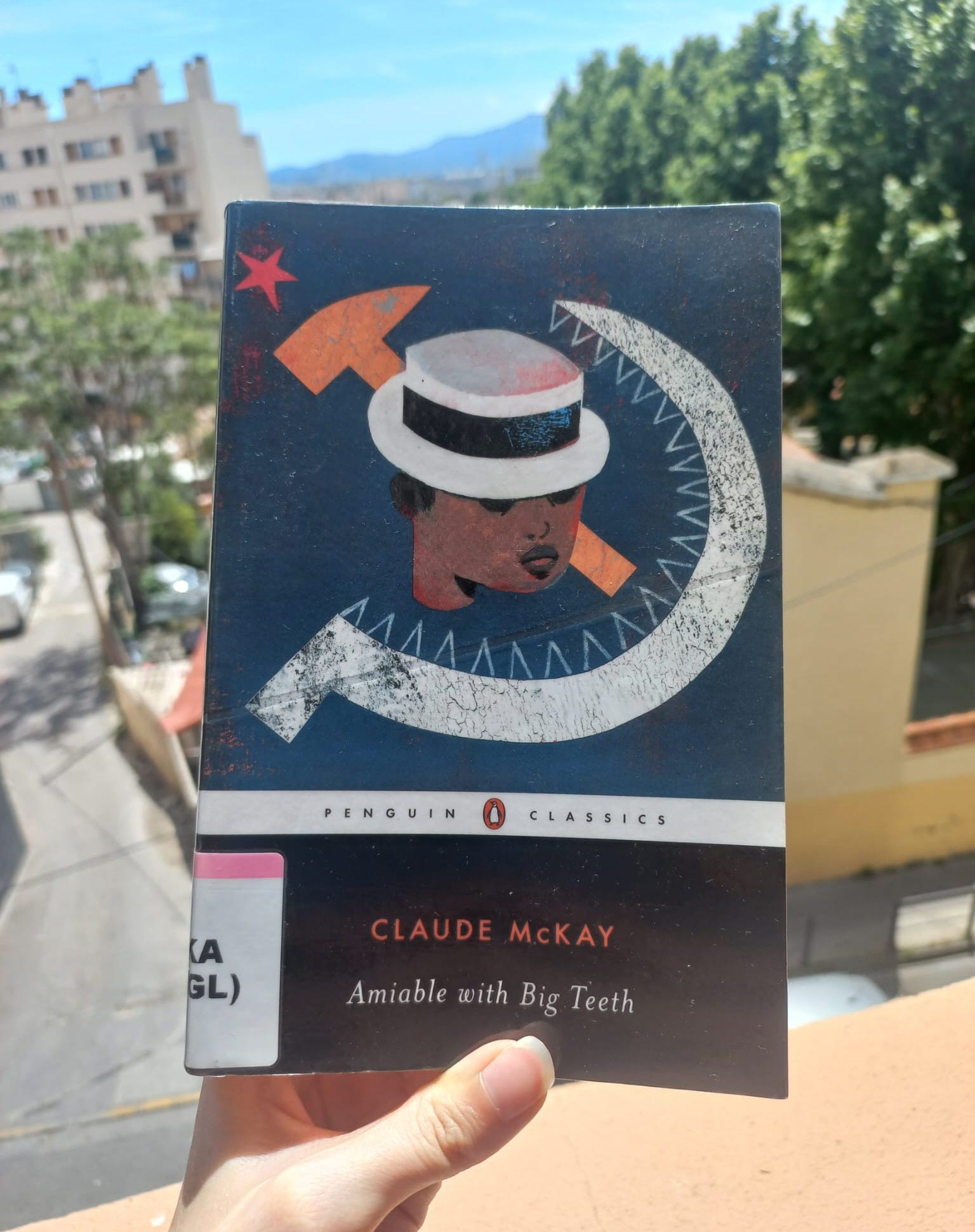
Amiable with Big Teeth is a previously unpublished book by Claude McKay, Jamaican-American writer and poet active in the 1910s-40s and part of the Harlem Renaissance. As you might be able to guess from the cover, it talks about black people and the communist movement.
Originally written in 1941, the book was rejected by publishers and vanished until being rediscovered and published in 2017. The plot focuses on a set of socially and politically active characters in Harlem in 1936, during Italy’s invasion of Ethiopia, a struggle that African Americans (or ‘Aframericans’, as they are referred to in the novel) passionately identified with. The main conflict of the book is between two groups: the Hands to Ethiopia black-run organisation supporting Ethiopia, and the White Friends of Ethiopia, which was run by white communists.
As the introduction, written by editors Jean-Christophe Cloutier and Brent Hayes Edwards, explains, McKay had a complicated relationship with communism. He was part of the IWW, and visited the Soviet Union in 1922, giving a speech to the 4th Congress of the Comintern on the situation of black people in America. He was a man committed to social and economic justice, but while he didn’t reject the principles of Marxism itself, he also did not feel comfortable identifying with any particular ‘ism, defining himself as intellectually independent and against all groupthink. With time, he became disillusioned with the Soviet project. He rejected the basic political ideology of communism as a dictatorship, and back home, he was suspicious of any political movements manipulating black organisations for their own ends.
As he phrased it in his book Harlem: Negro Metropolis, “the Communists were out to exploit all the social disadvantages of the Negro minority for propaganda effect, but they were little interested in practical efforts to ameliorate the social conditions of that minority.”
This is the main theme of Amiable with Big Teeth. The clear villains in the book are the characters associated with the communist-run White Friends of Ethiopia, who, when they failed to convince the Hands to Ethiopia organisation to join their cause, used dirty tactics to bring them down. Anyone who wasn’t a Stalinist-communist unconditionally supporting Soviet Russia was smeared and labelled a fascist and, as we would say today, cancelled.
As someone who has been part of leftist movements both online and offline for over ten years, I recognised the conflicts McKay depicts from my own experiences as well. The long, complicated labels to describe exactly who and what you support, spreading rumours and bringing up old controversies to effectively oust someone from the community (or ‘cancel’ them), community leaders with more influence and resources acting against their principles behind closed doors, not to mention the still-rampant racism in many leftist circles… It’s a comfort to know that so many before us have been dealing with these same problems and our generation isn’t alone, but it also makes trying to change things feel a bit futile — is it inevitable that we’re always going to be fighting each other while fighting for justice?
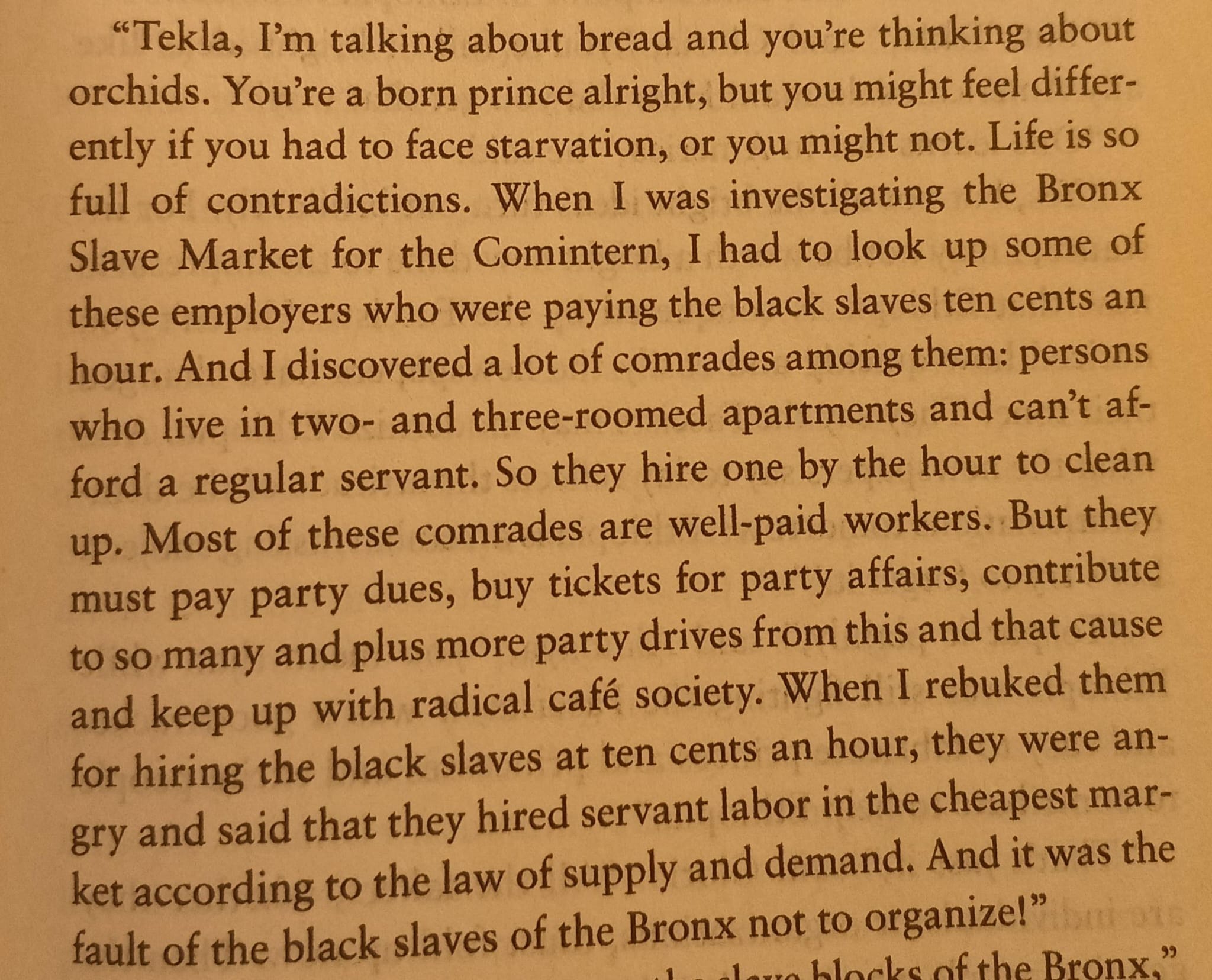
Personally, I grew up in an ex-Soviet country, and was raised to be critical of communism. My mother and all of her side of the family, as well as my teachers, friends’ parents, and most other adults I encountered in my youth grew up under the Soviet regime and always had stories to tell, most of them showing the system under a negative light. Though I have identified as a leftist since I first started engaging with politics in my early teens, I’ve also never been able to shake off my distrust of any type of authoritarian regime enough to call myself a communist. If I had to label myself an ‘ist, it would be anarchist.
However, differently from McKay’s time, authoritarian communism isn’t an actual threat we (in most of the world, at least) are facing today — neoliberal capitalism is. I’m willing to fight that threat alongside people whose views I don’t 100% agree with, even if I’m not sure what the ultimate common goals of that fight will be. My immediate concerns are keeping immigrants, queers, people of colour, women, disabled people and poor people safe, as well as fighting imperialism and global injustices — if you have those same concerns, we can work together.
While dealing with these universal issues, the story in Amiable with Big Teeth stays hyperlocal. The reader becomes a fly on the wall, witnessing conversations between grassroots activists on fundraising, event organising and dealing with opposing groups (from both sides). We get to see the nightclubs and black society parties of Harlem at the time, and what work at the offices of non-profit organisations looked like.
Amiable with Big Teeth is an interesting look into a specific time in a specific social group’s politics, and though the events and characters are fictional, they were clearly based on McKay’s real experiences and what he had witnessed in his community. The exception is the way he chose to end the book, which felt deliciously self-indulgent. I could almost feel the satisfaction McKay felt writing it, and shared that feeling with him.
I would recommend this book to anyone who wants a window into activists’ lives in the past, and to feel less alone in today’s struggle. I’m excited to read McKay’s two novels set in Marseille, the city I currently live in, next.